
We soon discover that everything that manifests itself and is sensitive needs to be witnessed in order to at least almost exist for us. It is for this reason that we are accomplices in a world that exists indifferent to any solitude, a world that itself has never needed witnesses, has never found meaning in being thought about or deciphered, resisting the superhuman effort of representation at all times.
(Paiva e Gusmão, 2012, p.21)

This website constitutes an open-ended account, written from a controversial first-person perspective — A first-person subject in relation to the machine and to natural elements — light, wind, and their fluctuations. Here, I document the pursuit of an idea of landscape that, emerging from a questioning of Language as a dispositif, proposes a poetic orientation shaped by machinic agency. It seeks to glimpse the potential of a (v)ideogrammatic mediation, where image, sound, and code intertwine in the inscription of an expanded sensibility.
This digital space accompanies an ongoing research project — a journey that remains deliberately open. The machine presented here results from a process of technical individuation which, by shedding its accessory components, moves towards its essential core. It is through this gesture of stripping down and expansion that the conditions arise for the machine to exceed itself, surpassing its functional limits and entering the domain of the poetic.
The presumptive aesthetic object I attempt to generate through this dialogue with the machine and natural elements carries the memory of all the times I have walked along a riverbank. That margin — often that of a river — is a space of latency, where something of the “original magical phase” evoked by Gilbert Simondon reveals itself. It is within this site of contact that the experience becomes geo-referenced, tracing an inscription between the natural, the technical, and the sensitive.
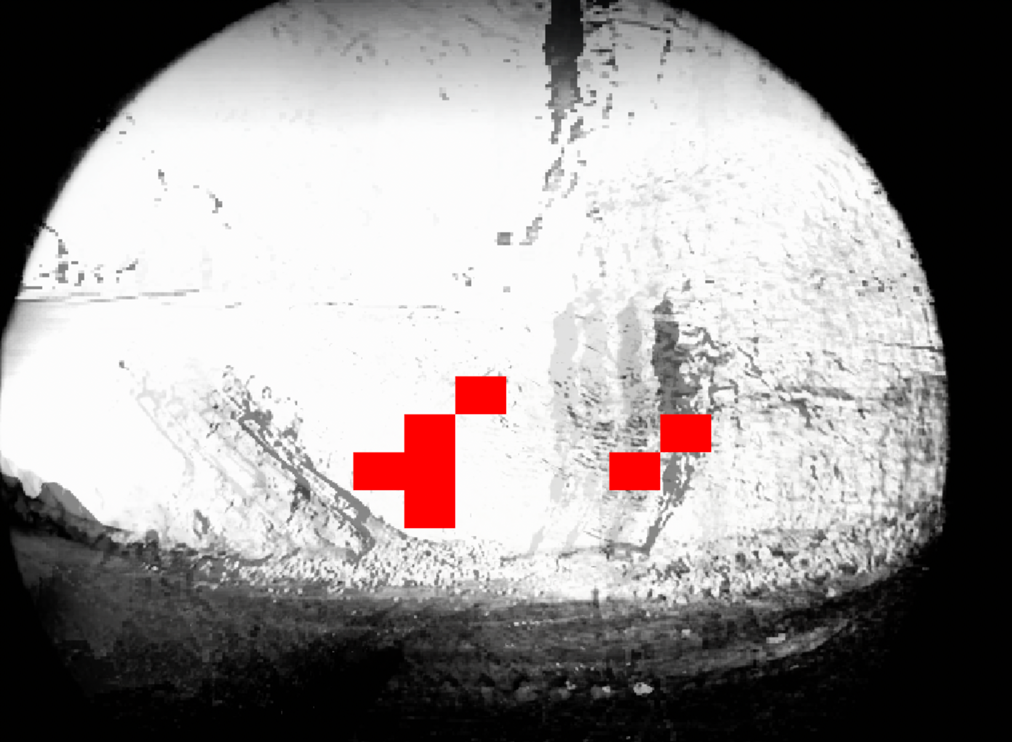
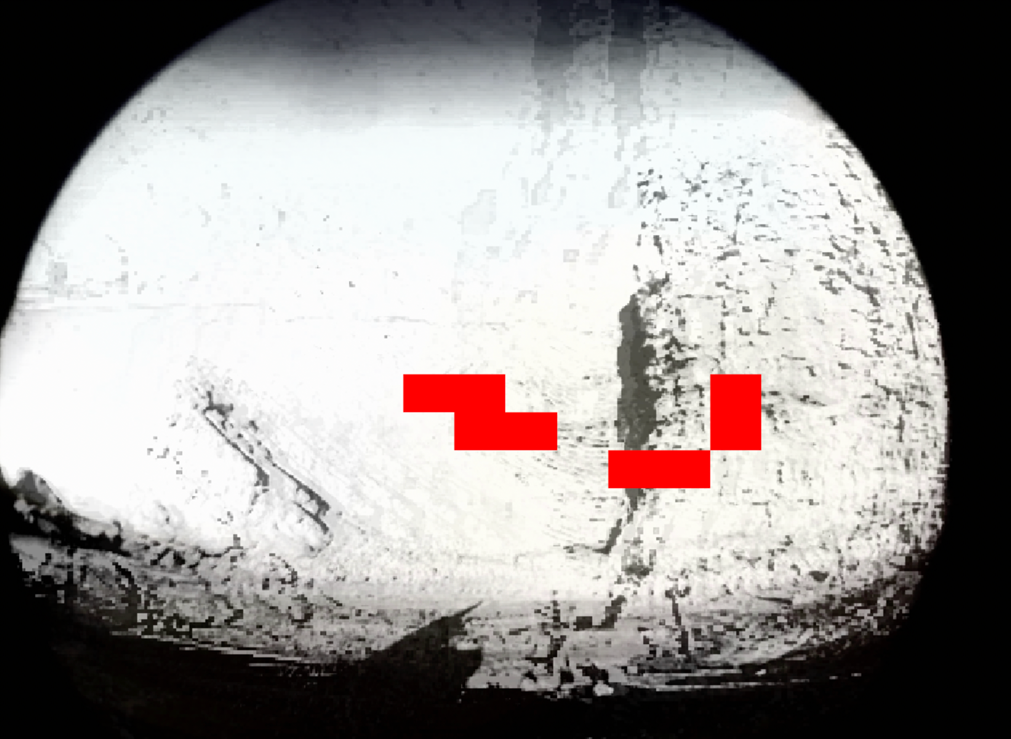
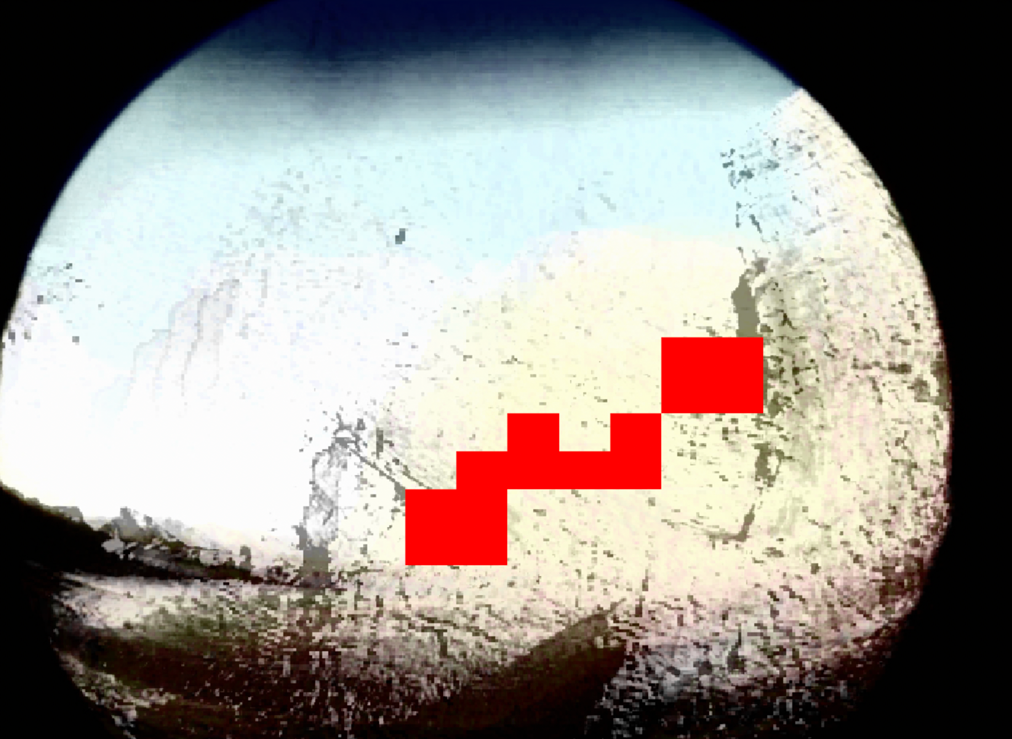
The river is always present. It is a memory that resurfaces in the breaking of waves against the cliff, where Jurassic traces seem to whisper an ancestral idea of the landscape — a landscape mediated, inscribed, and perhaps poetically re-inscribed.
v)Ideogrammatic Mediation as a Transductive Essay of the Landscape
The mediation performed by the [v]IWM constitutes an essay — understood not as a provisional attempt, but as an experimental gesture of inscription — through which a poetic diagrammatics is activated. This process emerges from a transductive relationship between a technical compound and the natural elements of the mediated sites, namely air masses, light, and their fluctuations. This relationship does not merely translate the sensory or technical dimensions of the landscape; rather, it enables the emergence of a certain idea of landscape, constructed within the tension between the natural and the machinic, the visible and the latent.
The (v)Ideogrammatic Writing Machine exceeds itself by transcending its instrumental function, revealing — through its process of technical individuation — the capacity to inscribe the real poetically. Its registers do not aim to represent the site, but rather to make contact with the latency of an original magical phase, as conceptualized by Gilbert Simondon — a phase prior to the division between the human and the technical, where mediation with the world was of a ritual and symbolic nature.
It is within this entanglement of planes — technical, natural, and sensorial — that the [v]IWM operates, producing a singular language: a (v)ideogrammatic writing in which code, image, and sound converge to reveal the landscape not only as a sensible reality, but as a symbolic and poetic instance. Through this writing, a certain idea of human logos is brought into perspective — understood not as an imposition of rational order upon the world, but as an attempt to stabilise, however provisionally, the meaning of the world through a mediating, technical, and sensitive gesture.